The brass key turns in the lock with a soft click that seems to echo not just in the empty room but in the deeper chambers of memory. Inside, everything remains exactly as it was on his last official day: the sorting desk, the wooden pigeonholes, the ancient scales that weighed parcels with the same indifferent precision.
Upon the table, beside the candle’s warm circle of light, lies a passport — leather the colour of autumn leaves, soft with age. Its pages are thick as parchment, each one a doorway rather than a record. This is no ordinary passport: it bears stamps not of countries that are, but of places that were.
Beneath the apple trees, the old boat rests as if it has always belonged there. Moss softens its edges, leaves gather in its hull, and time slows to a gentler rhythm. It offers no journey—only a place to sit, and remember.”
Cherry petals drift through lantern light, falling without urgency, without regret. The village breathes softly beneath the moon, each step along the cobbled path smoothing the day’s edges. In this gentle hour, beauty asks nothing—only that it be witnessed.
Far above the world, where the air grows thin and the last light of evening dissolves into something softer, a garden floats in permanent stillness. Its pathways are formed from pale stone that holds its own faint glow, and its flower beds grow not from soil but from crystallised moonlight.
There is a door at the end of an alley that most people walk past without noticing. The ivy reaches for it, the fog gathers around it, and when the door opens it does so without effort — as though it has been expecting this particular arrival.
The first drop arrives as evening settles across the countryside, striking the copper roof with a sound like a small bell touched by a careful finger. Then another follows, and another still, each one finding its place in the quiet music of shelter and rain.
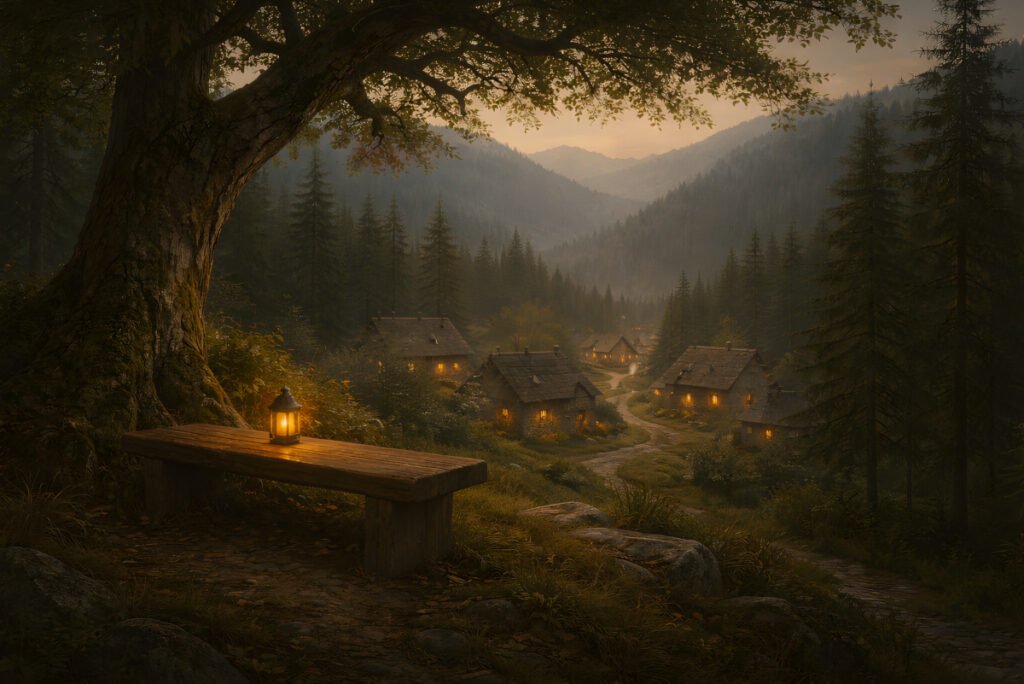
The path begins where the noise ends, rising through pine and stone into a place shaped by quiet lives and patient time. In this high village, nothing asks to be understood. The mountain remembers everything, and those who pause within its stillness begin to remember something within themselves as well.
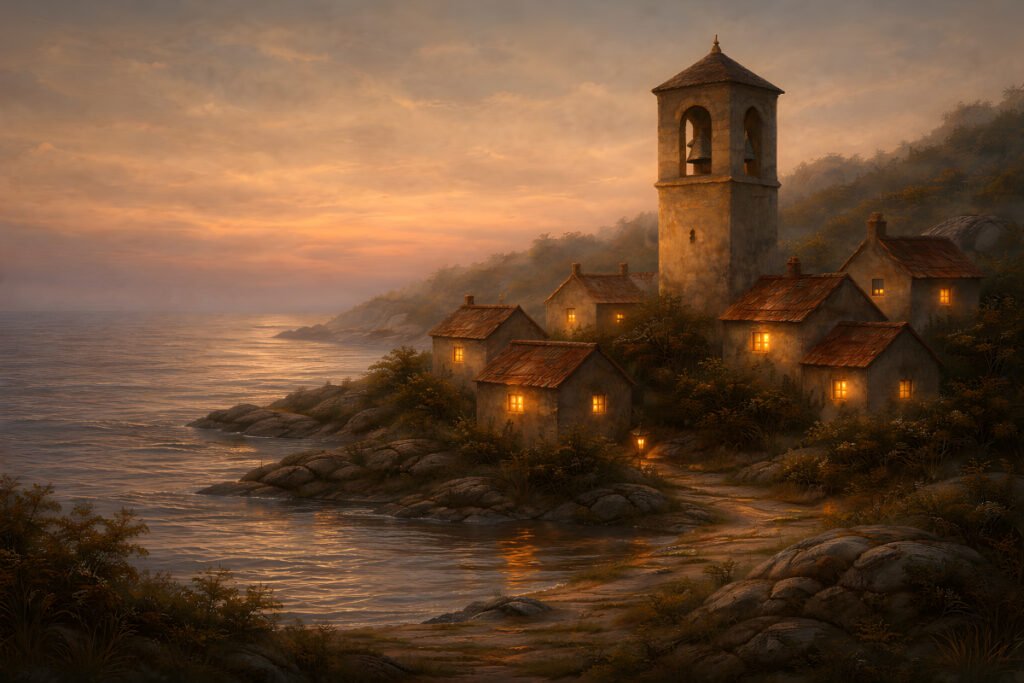
As dusk falls over the harbour, a bronze bell rings without human hands. Below, a town pauses. A woman kneading bread hears a lullaby she thought forgotten. A child recognises the shape of an absence. A watcher on the cliff simply listens. Some evenings, the air carries more than salt and silence.
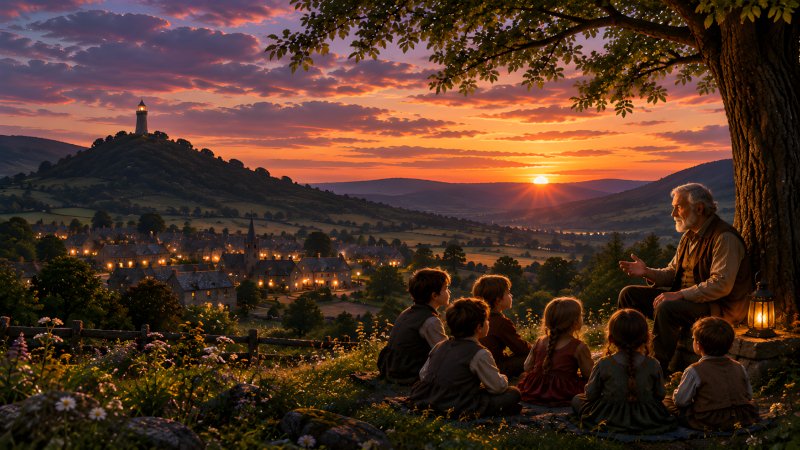
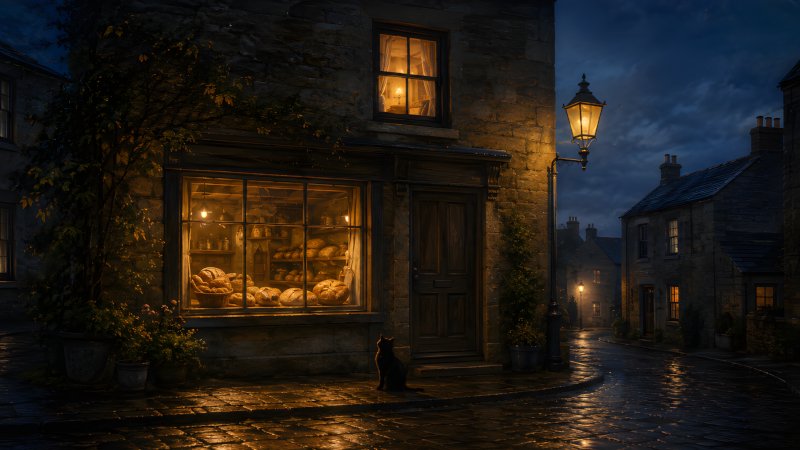
The village settled into the last hour before dark, when the light thinned to the colour of weak tea. A dog somewhere near the bake house gave up barking and lay down instead. Even the hens, who had spent the afternoon arguing over nothing in particular, went in without complaint.I trimmed the opening sentence and left out the chimney smoke…
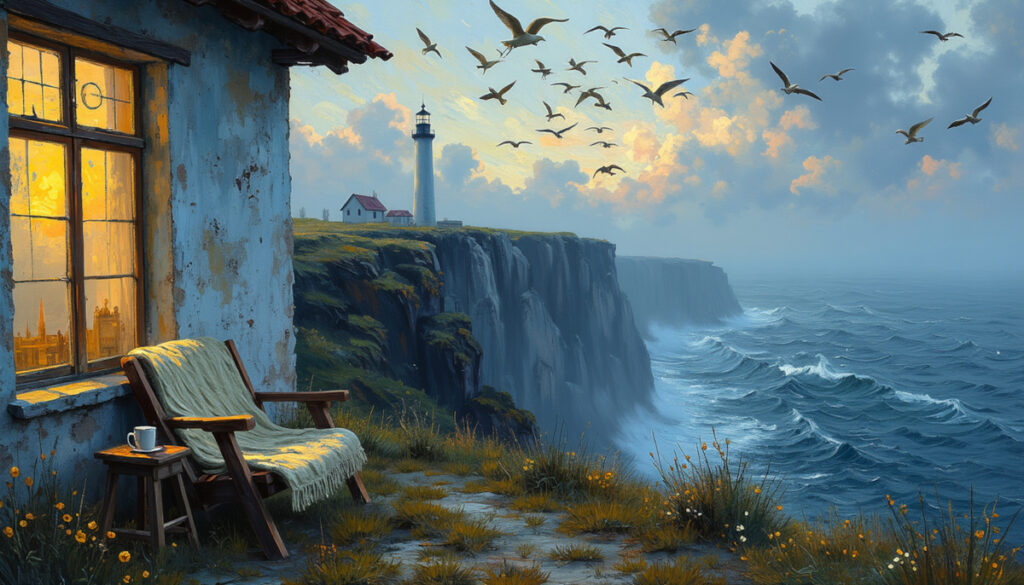
He had done this — sat in this chair, at this hour, in this light — for so many evenings that the motion felt older than memory. But tonight, he noticed every detail with a soft alertness, as if seeing the view for the first time and the last.
At dusk, the villagers gather by the river, each carrying a lantern and a memory. One by one, they release their quiet reflections into the current, watching the lights drift away. In the soft glow, the past loosens its hold, and the night welcomes what remains with calm acceptance.
The silver field stretches without end beneath a sky the colour of old pewter, where the last light of day has settled into something softer than evening, quieter than dusk. The tall grasses sway with a sound like whispered lullabies, their seed heads catching what remains of the light and holding it tenderly.
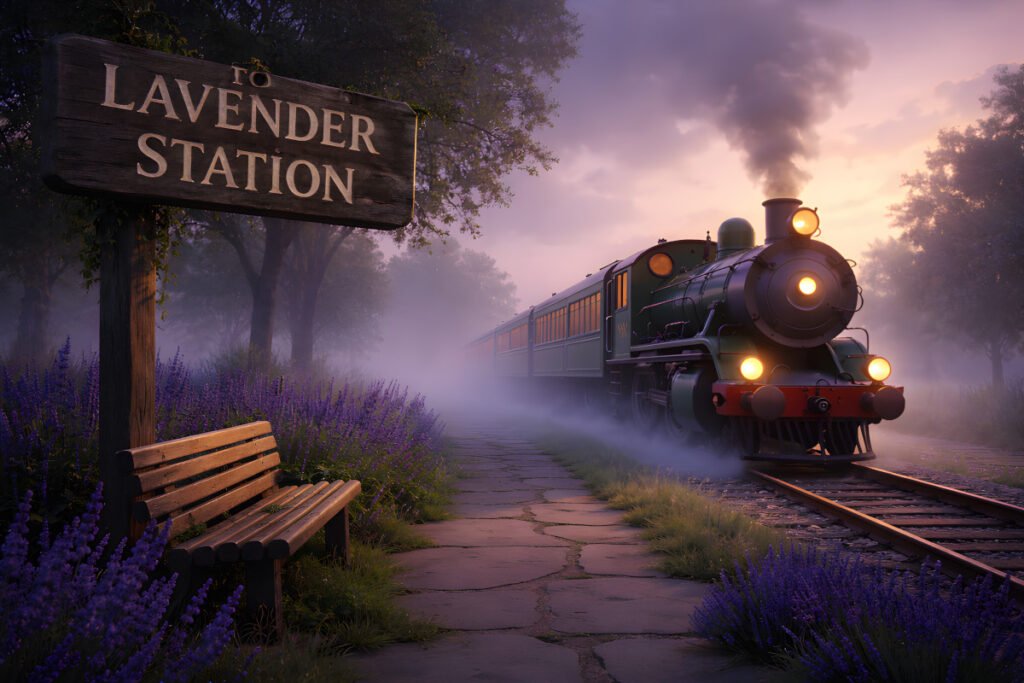
In the hours before morning has claimed the sky, a sound moves through the countryside — soft enough to be mistaken for wind through wheat. The station sign still stands, its letters worn by years of weather. Lavender Station. Those who come here do not plan to.
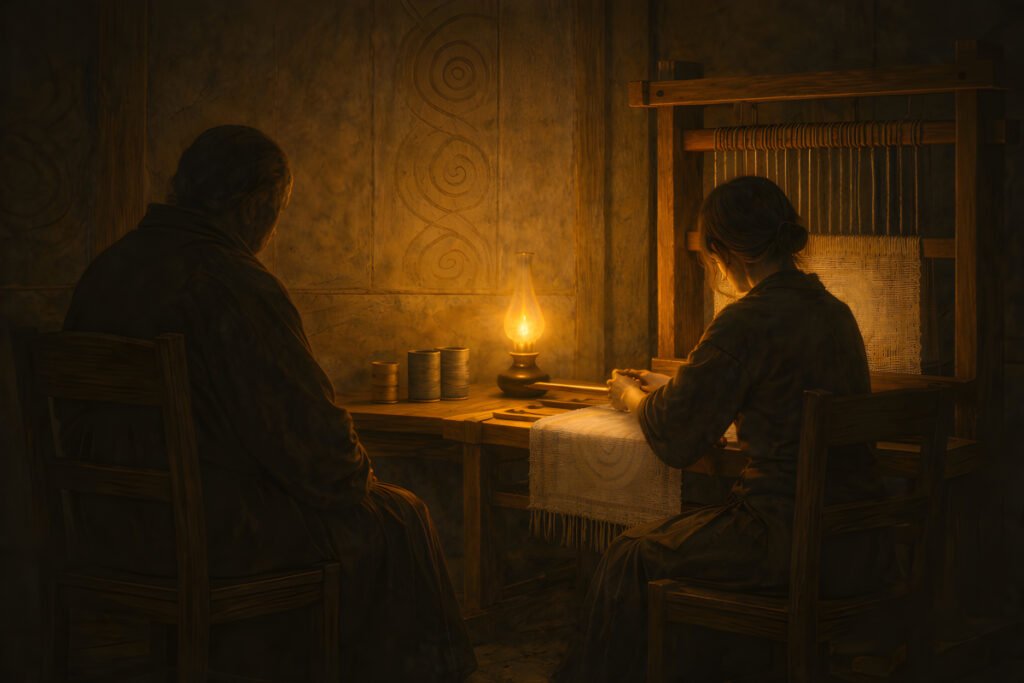
A woman known only as the Weaver tends her loom inside an ancient mountain temple, receiving in silence the pilgrims who seek her out. Each visitor leaves a trace in the cloth she creates. The patterns are not designed — they arrive through stillness, one thread at a time.
Her hands move among the plants with the tenderness of a mother checking sleeping children. The garden knows her silence. She has never spoken to these growing things with words, yet they seem to lean towards her touch, to offer their best leaves, their most fragrant blooms.
Before the sun has properly risen, the cobbled street lies wrapped in the last blue of night. High above, a window waits on the third floor of a narrow building. Soon it will open, and the scent of bread will begin its slow climb through the building’s bones.
The summit has its own silence, distinct from the silence of lower places — thinner, older, shaped by wind and stone and the slow turning of the sky above. The observatory sits at the edge of this silence, a dome of weathered metal that has learned to wait without restlessness.
Lantern light gathers along the rim of the terrace as the scholar lifts the pot for the fourth time. Across from him, the emperor’s sleeve thins where steam drifts through it. Neither speaks. The tea settles into porcelain, warm and fragrant, while the mountains darken and the stars quietly arrive.
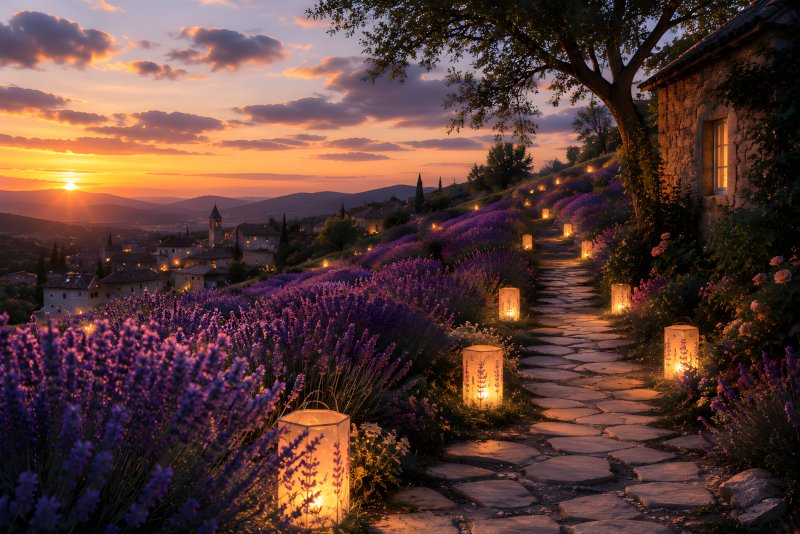
The stone path winds between the hills like a prayer traced in earth, worn smooth by countless footsteps and the gentle passage of seasons. Here, where the lavender grows in great rolling waves, the air still holds the day’s warmth, that particular sweetness of summer evenings when time seems to…
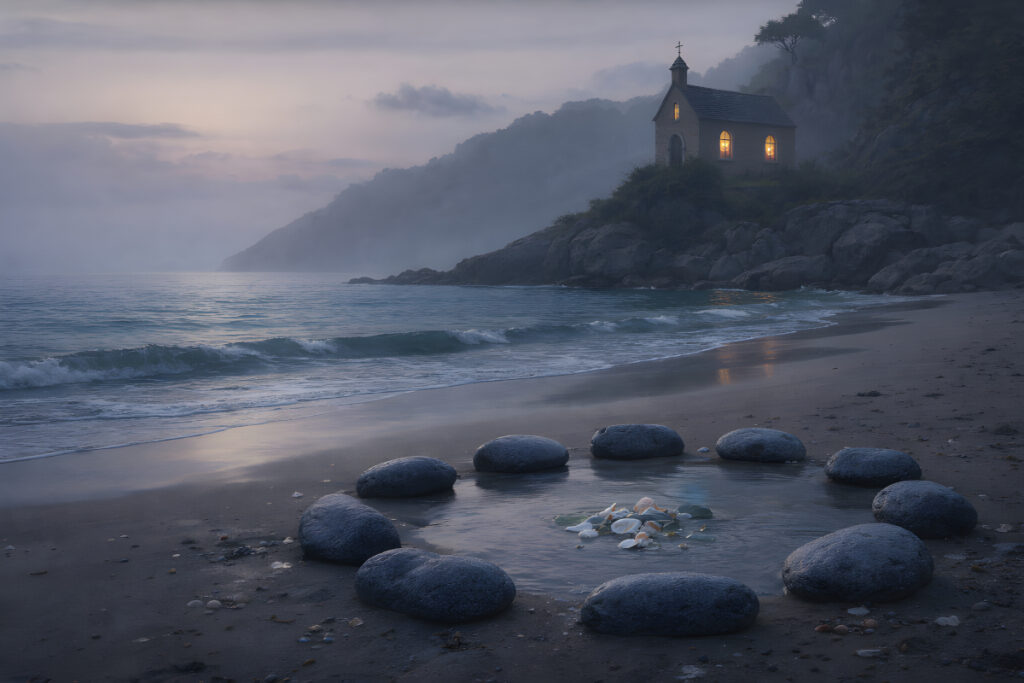
There is a sound beneath the chapel when the tide is low. Not quite a voice. Not quite silence. A boy returns to the shore each morning and listens. In the quiet between waves, he begins to feel that the sea remembers more than anyone has ever spoken.