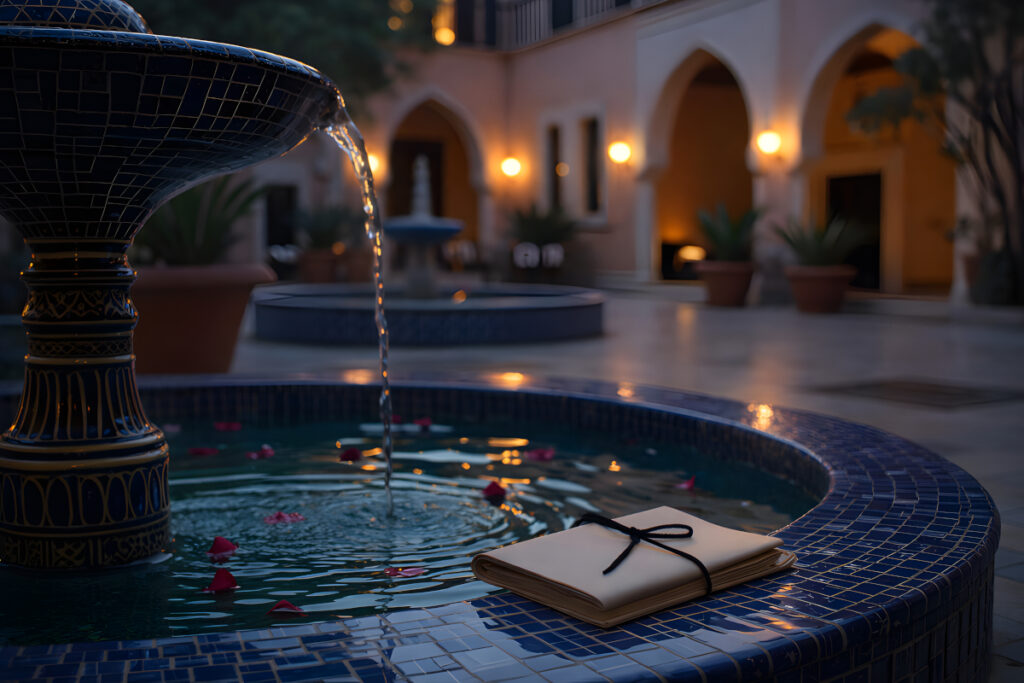
In a quiet courtyard, where lantern light rests softly on water, she sits alone at a small table. The fountain moves in gentle circles, carrying no urgency. Nothing asks to be solved. Nothing needs to be held. And in that stillness, something within her begins to settle.
The sails begin their slow revolution, catching the mild breeze that moves across the grassland. There is no urgency in their turning — only the rhythm of wind meeting wood, of movement born not from force but from invitation. Each blade sweeps through the air with a whispered creak, a sound so familiar to this place that even the larks…
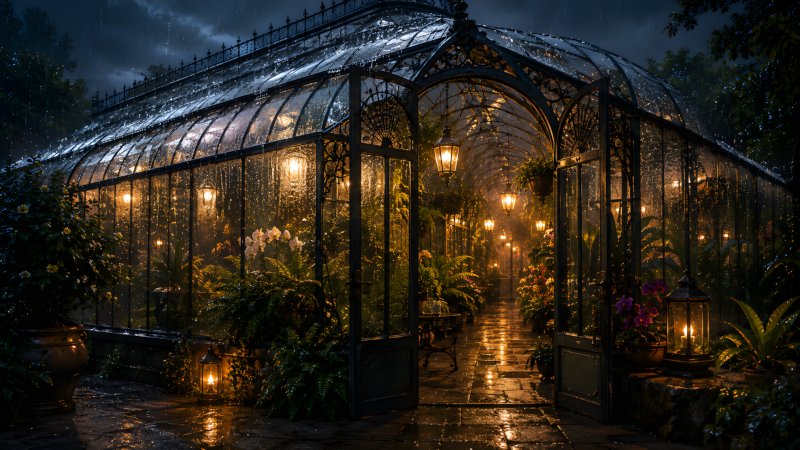
The lanterns in this section were old, fixed at intervals along the iron framework above, their amber light catching the surface of wet leaves and turning ordinary green into something burnished and deep. A pipe ran the length of the ceiling, insulated in places with cloth wrappings darkened by years.
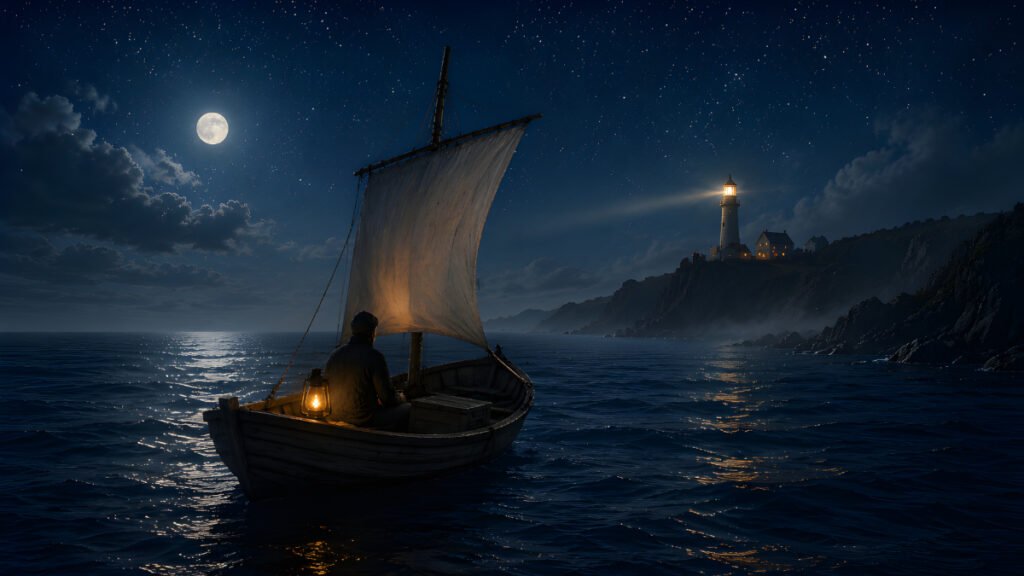
A pulse of light, far off to the north-east. Slow and steady, appearing and disappearing in a rhythm that carried no urgency, a patient turning that repeated itself without change. He did not change course toward it. There was no reason to. It was simply there, doing what it had always done.
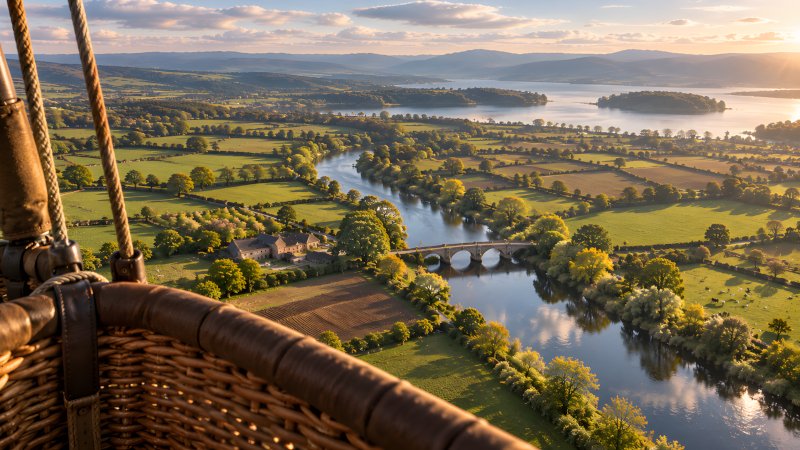
Drift above quiet fields, winding rivers and distant towns as the wind carries a solitary balloon steadily across the changing landscape. As daylight softens and mountains rise through the clouds, The Flight Carried by the Wind becomes a peaceful journey through height, distance and stillness towards a restful night.
The brush touches paper, and nothing appears. Yet something has been deposited — Thomas can feel it in the resistance of the fibres. Over thirty years, he has learned to trust the movement of his hand, the rhythm of his breathing. But this is different. This ink asks for something else entirely.
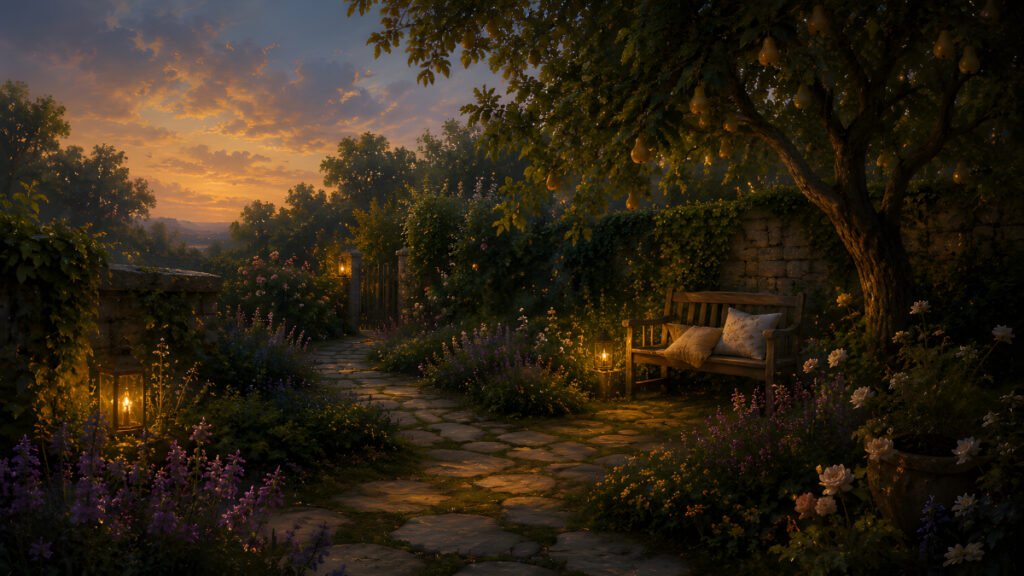
The sun arrived first as whisper, then as warmth, threading itself between the leaves of the old fig tree that stood sentinel beside the garden’s eastern wall. Light pooled in gentle puddles across the flagstone paths, catching dewdrops that had settled overnight on the petals of roses climbing the weathered brick.
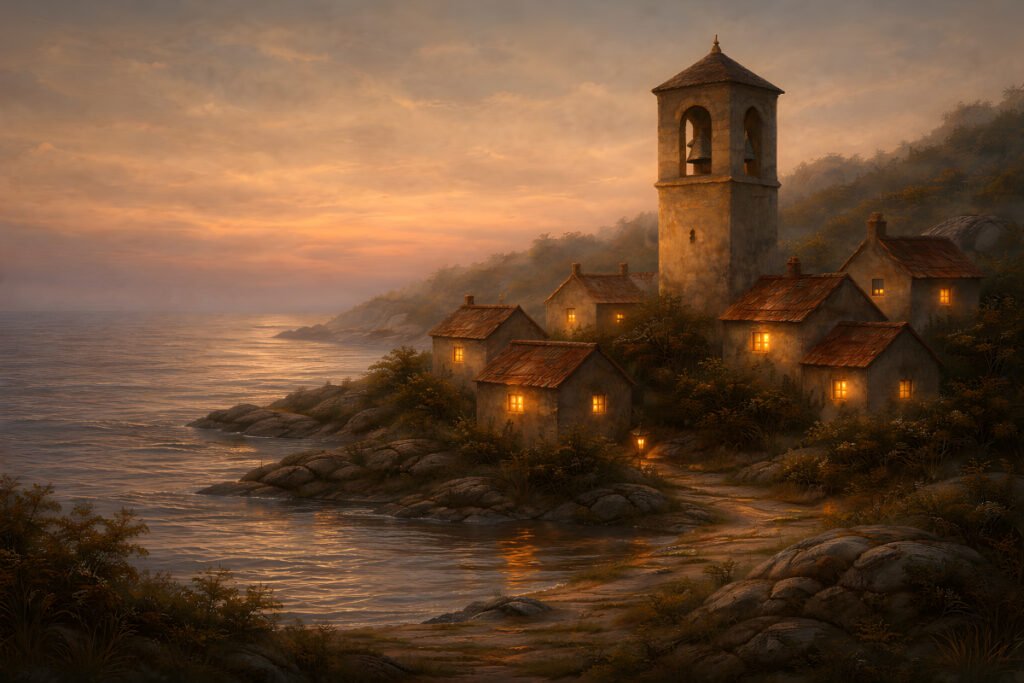
As dusk falls over the harbour, a bronze bell rings without human hands. Below, a town pauses. A woman kneading bread hears a lullaby she thought forgotten. A child recognises the shape of an absence. A watcher on the cliff simply listens. Some evenings, the air carries more than salt and silence.
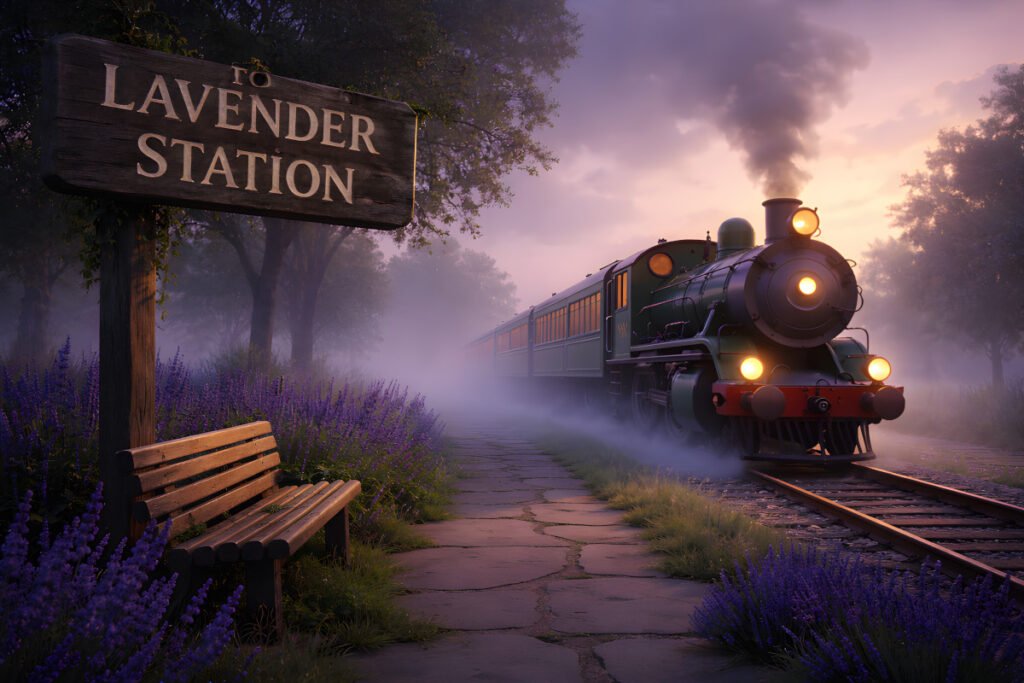
In the hours before morning has claimed the sky, a sound moves through the countryside — soft enough to be mistaken for wind through wheat. The station sign still stands, its letters worn by years of weather. Lavender Station. Those who come here do not plan to.
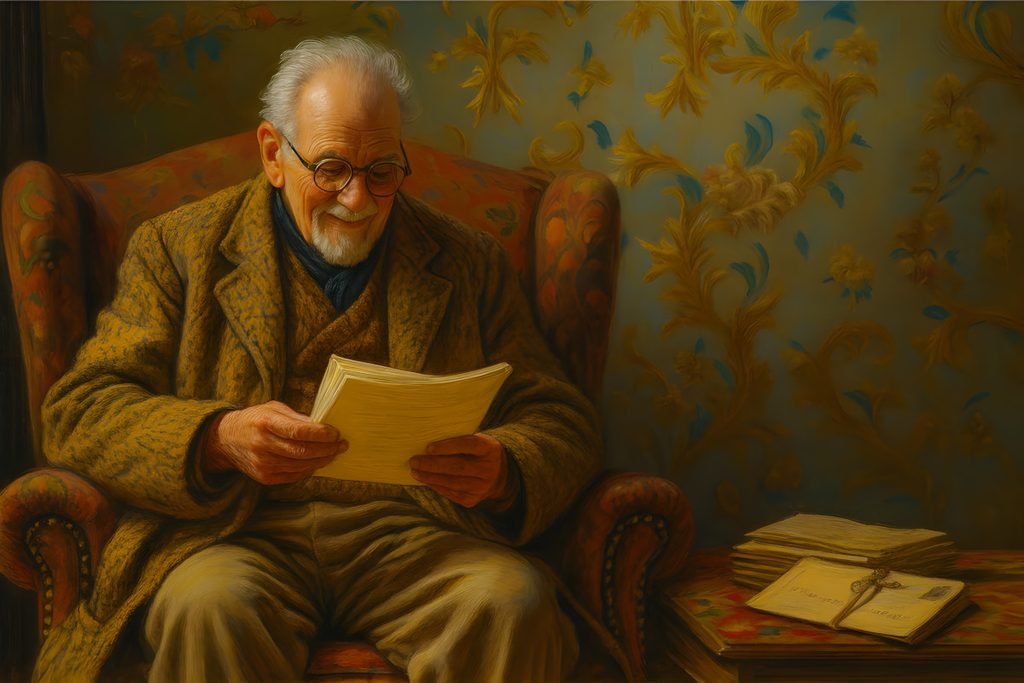
The box had been placed with care — weathered wood, postal twine tied in knots he recognised from decades of handling. On the bottom, in faded pencil, someone had written Undelivered — 1962–1989. His own handwriting, though he had no memory of making the notation. The years struck him as curious.
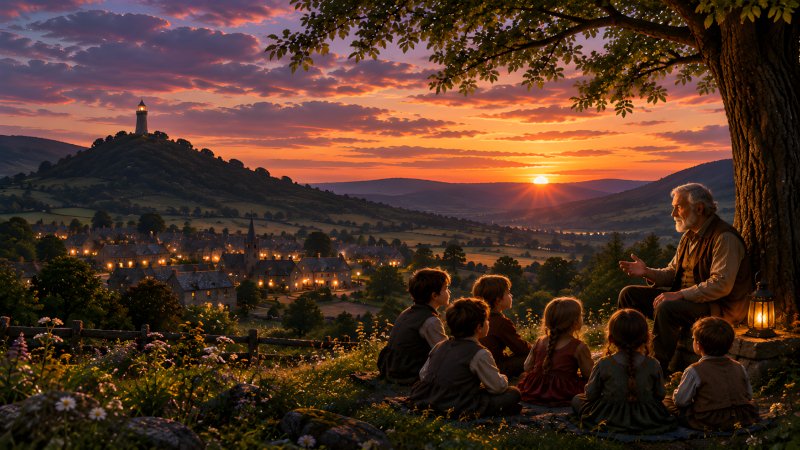
The village settled into the last hour before dark, when the light thinned to the colour of weak tea. A dog somewhere near the bake house gave up barking and lay down instead. Even the hens, who had spent the afternoon arguing over nothing in particular, went in without complaint.I trimmed the opening sentence and left out the chimney smoke…
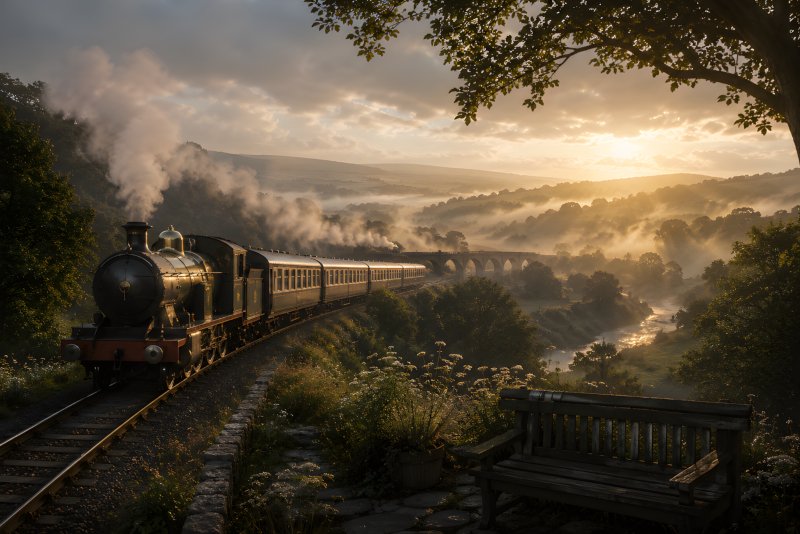
The train appears first as a suggestion in the mist, a darker grey against the pearl-coloured air. As it draws nearer, its form resolves into something beautiful and unexpected, not the sleek anonymity of modern transport, but an old carriage painted muted greens and golds, its windows tall and generous.
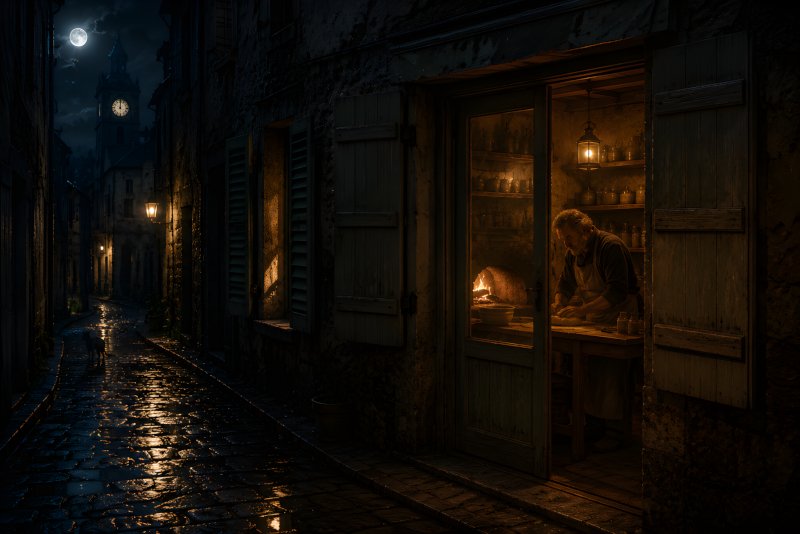
Clock tower strikes twelve, and the sound drifts down through the narrow streets like water finding its way to the sea. In the old quarter, where buildings lean against one another like tired friends, the cobblestones catch the moonlight and hold it, each rounded stone a small pool of silver.
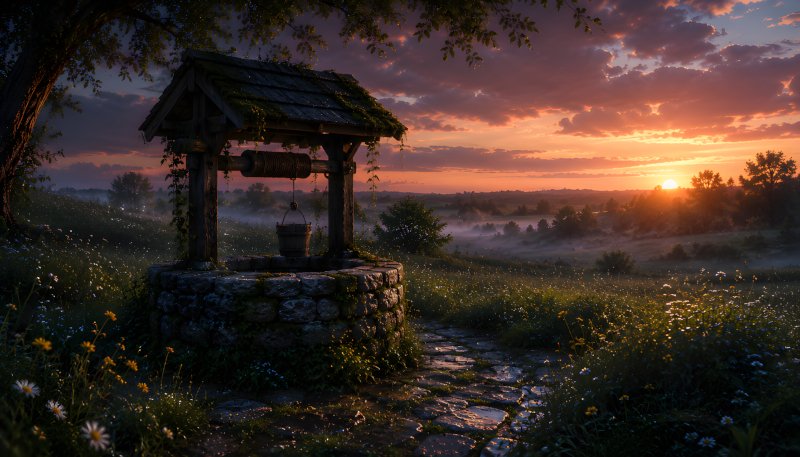
At the meadow’s heart, you see it: a circle of weathered stone rising from the grass like a perfect ring of ancient song. The well. Even from this distance, you can sense its presence, not imposing, but magnetic in the way certain places draw you without explanation. It waits here.
Cherry petals drift through lantern light, falling without urgency, without regret. The village breathes softly beneath the moon, each step along the cobbled path smoothing the day’s edges. In this gentle hour, beauty asks nothing—only that it be witnessed.
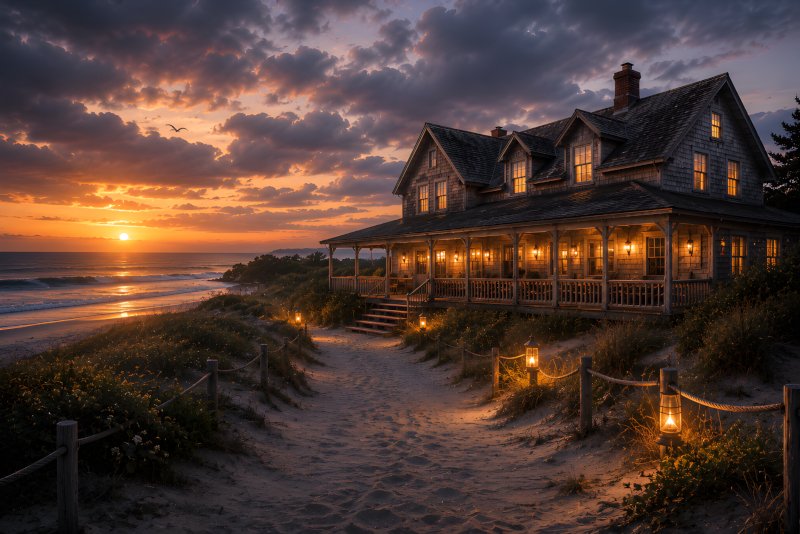
Dusk settles over the dunes as a lone traveller follows a sand-crusted road toward a weathered inn glowing with lamplight. Inside, corridors hold the scent of driftwood smoke and dried lavender. A room waits beyond a painted window, where sea glass colours soften the view toward the waiting shore.
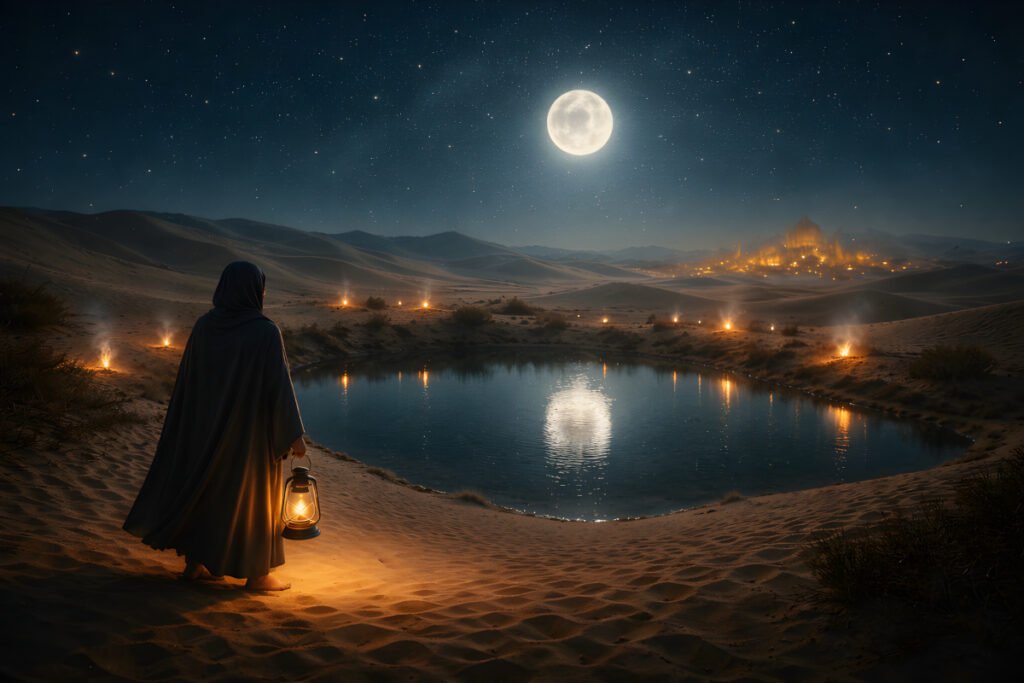
Moonlight rests unbroken on the pool’s surface, holding the sky as if it were memory made visible. The traveller does not speak. The lantern burns steadily at their side. Across the dunes, distant lights shimmer, neither calling nor refusing—only waiting to be seen.
Lantern light gathers along the rim of the terrace as the scholar lifts the pot for the fourth time. Across from him, the emperor’s sleeve thins where steam drifts through it. Neither speaks. The tea settles into porcelain, warm and fragrant, while the mountains darken and the stars quietly arrive.
The path appeared just as the light began to soften, curving through tall grass that whispered against worn stone. Somewhere ahead, through the amber haze of approaching dusk, a building emerged — not quite a house, not quite an inn, but something altogether more welcoming than either.
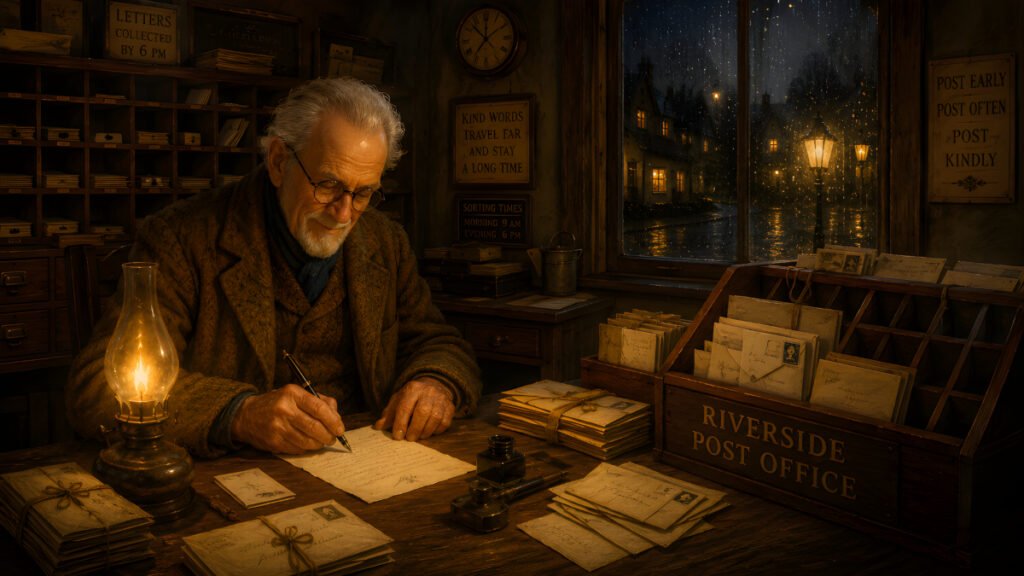
The brass key turns in the lock with a soft click that seems to echo not just in the empty room but in the deeper chambers of memory. Inside, everything remains exactly as it was on his last official day: the sorting desk, the wooden pigeonholes, the ancient scales that weighed parcels with the same indifferent precision.
The gondola moved, not with urgency, but with reverence, its hull cutting a single line through the mirrored water. No lantern was lit. The moon was enough. Venice reclined in silence, releasing its stories slowly, trusting the night to carry them onward.