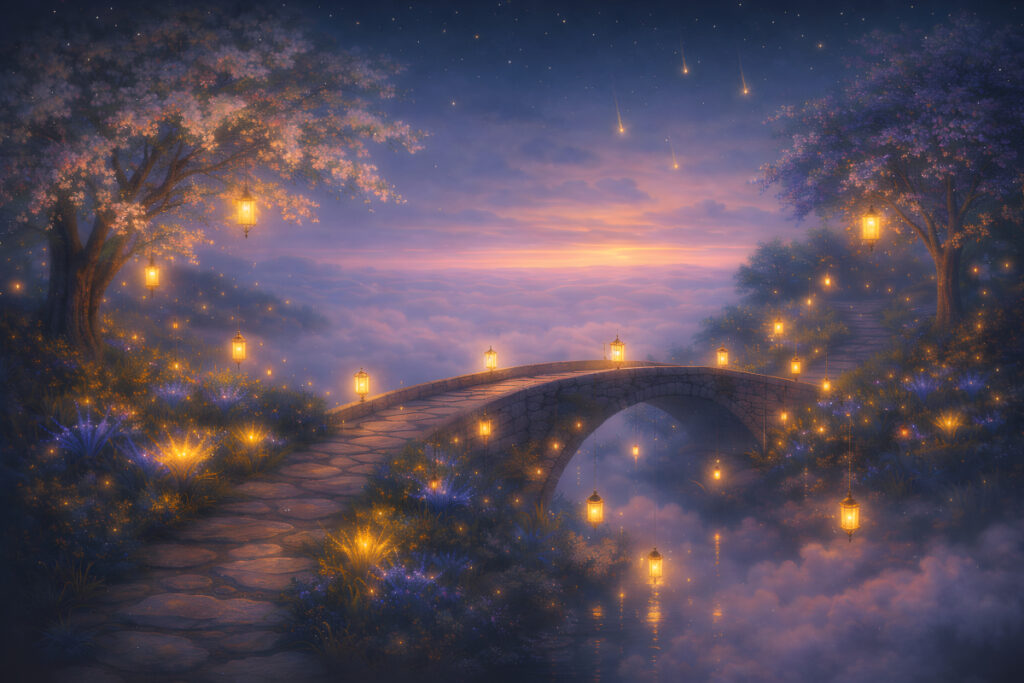
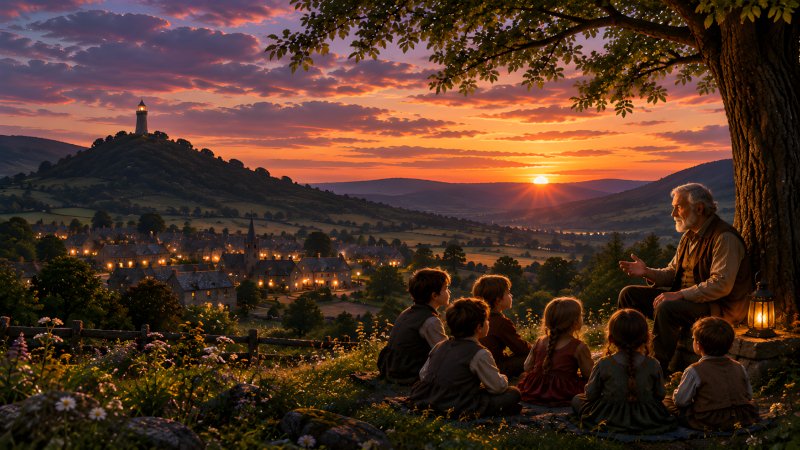
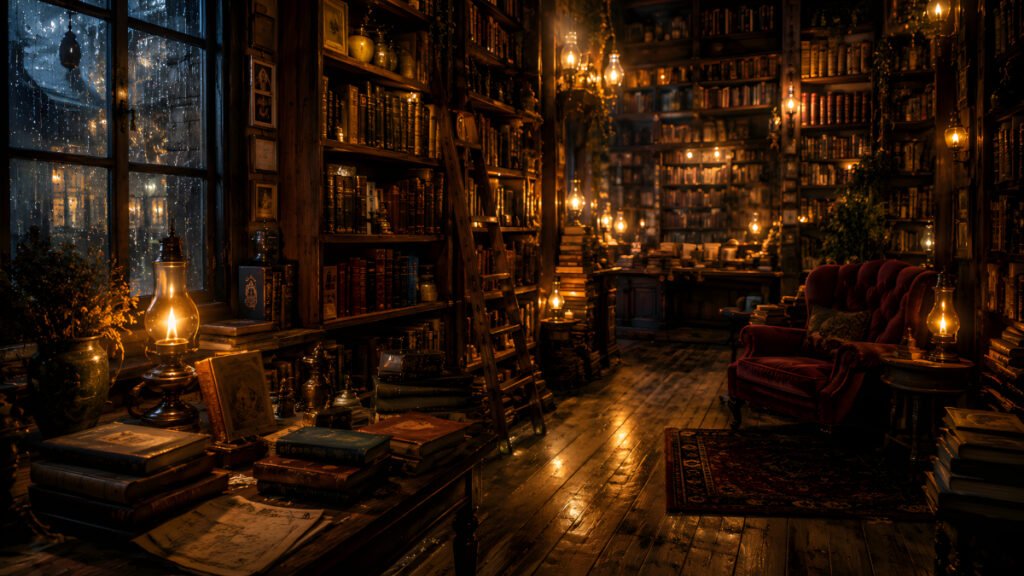
Twilight drifted through the ancient forest as the travellers stepped softly beneath the trees, their footsteps becoming part of the quiet. Lanterns appeared along the trail, one after another, hovering without urgency. Somewhere ahead, The Lantern Lit Sanctuary waited — not to be discovered, but to be recognised.
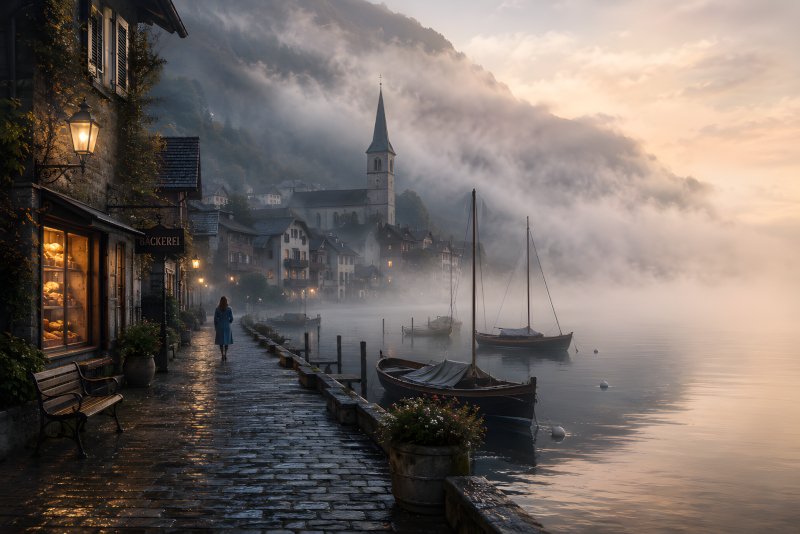
From the guesthouse window on the second floor, the traveller watched the fog drift across the lake like something alive, something breathing. It moved with purpose, yet without haste, rolling over the water in slow, lapping waves that seemed to pulse with their own quiet rhythm. The lake itself had disappeared…
Upon the table, beside the candle’s warm circle of light, lies a passport — leather the colour of autumn leaves, soft with age. Its pages are thick as parchment, each one a doorway rather than a record. This is no ordinary passport: it bears stamps not of countries that are, but of places that were.
The brush touches paper, and nothing appears. Yet something has been deposited — Thomas can feel it in the resistance of the fibres. Over thirty years, he has learned to trust the movement of his hand, the rhythm of his breathing. But this is different. This ink asks for something else entirely.
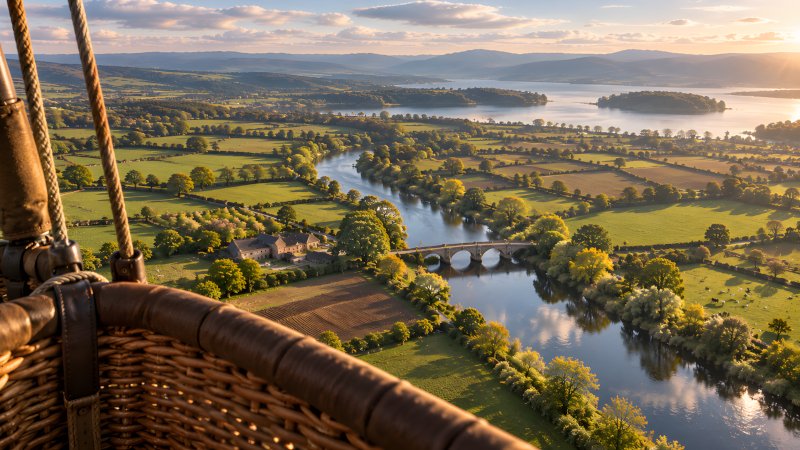
Drift above quiet fields, winding rivers and distant towns as the wind carries a solitary balloon steadily across the changing landscape. As daylight softens and mountains rise through the clouds, The Flight Carried by the Wind becomes a peaceful journey through height, distance and stillness towards a restful night.
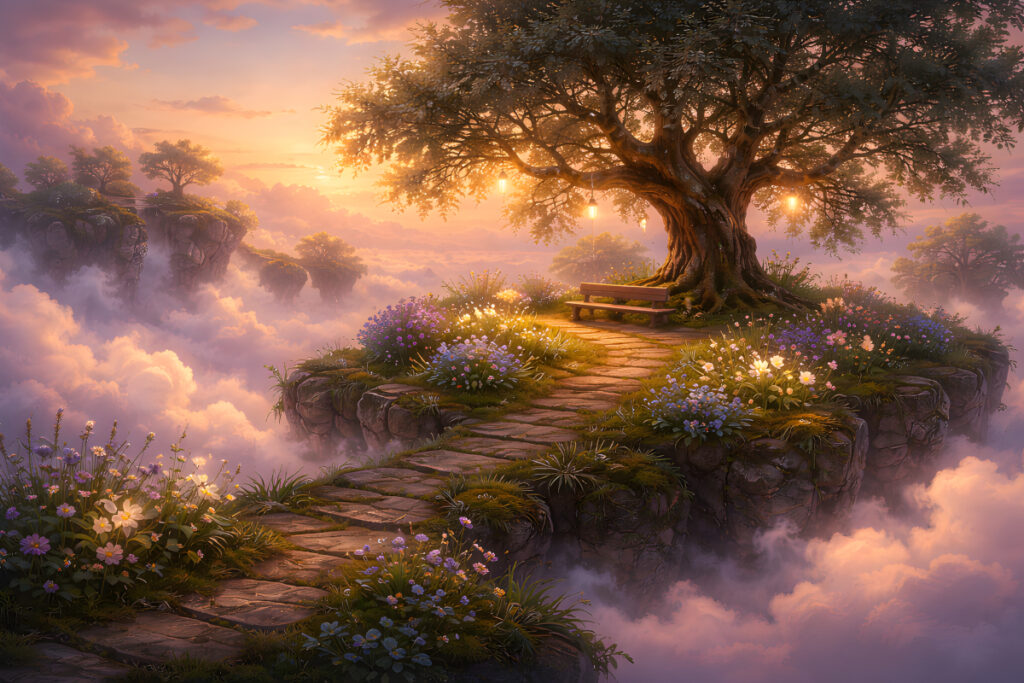
Far above the world, where the air grows thin and the last light of evening dissolves into something softer, a garden floats in permanent stillness. Its pathways are formed from pale stone that holds its own faint glow, and its flower beds grow not from soil but from crystallised moonlight.
The cottage is a short walk from a private jetty. Its walls are the colour of old shell, and at the wide window the blue curtains lift in a real breeze, just as they did in the photograph that brought her here. She stands for a moment before going in.
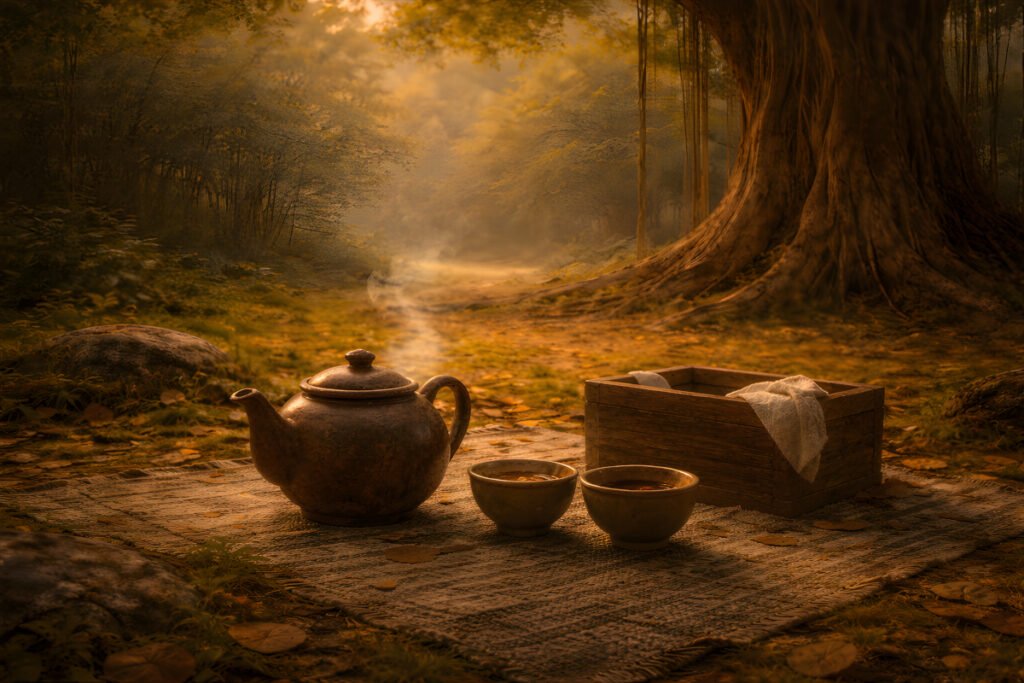
The afternoon had thinned into that particular hour when light loses its weight, spreading low across the fields without casting the sharp shadows of midday. A traveller moved along a footpath that cut through open countryside, boots pressing into grass still warm from the sun, though the warmth itself seemed
The path begins where the noise ends, rising through pine and stone into a place shaped by quiet lives and patient time. In this high village, nothing asks to be understood. The mountain remembers everything, and those who pause within its stillness begin to remember something within themselves as well.
The box had been placed with care — weathered wood, postal twine tied in knots he recognised from decades of handling. On the bottom, in faded pencil, someone had written Undelivered — 1962–1989. His own handwriting, though he had no memory of making the notation. The years struck him as curious.
The bird sleeps with the kind of stillness that speaks of deep purpose. Its feathers catch light that comes from no particular source, and the wildflowers around it grow more vivid, as though colour itself were learning how to breathe.
Before the sun has properly risen, the cobbled street lies wrapped in the last blue of night. High above, a window waits on the third floor of a narrow building. Soon it will open, and the scent of bread will begin its slow climb through the building’s bones.
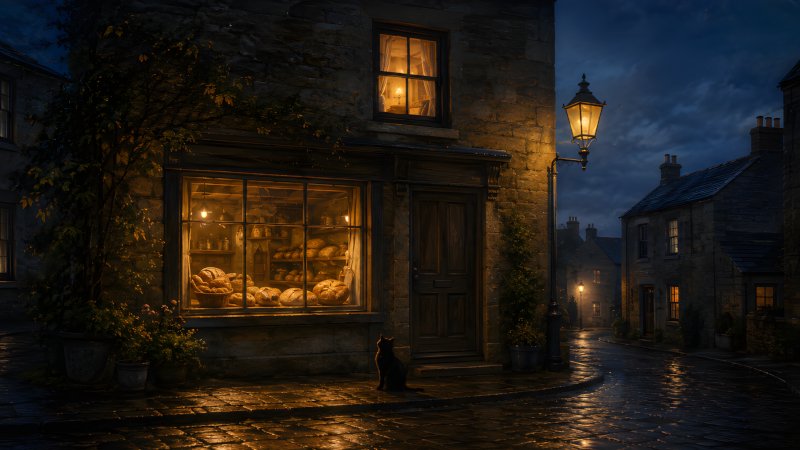
The village settled into the last hour before dark, when the light thinned to the colour of weak tea. A dog somewhere near the bake house gave up barking and lay down instead. Even the hens, who had spent the afternoon arguing over nothing in particular, went in without complaint.I trimmed the opening sentence and left out the chimney smoke…
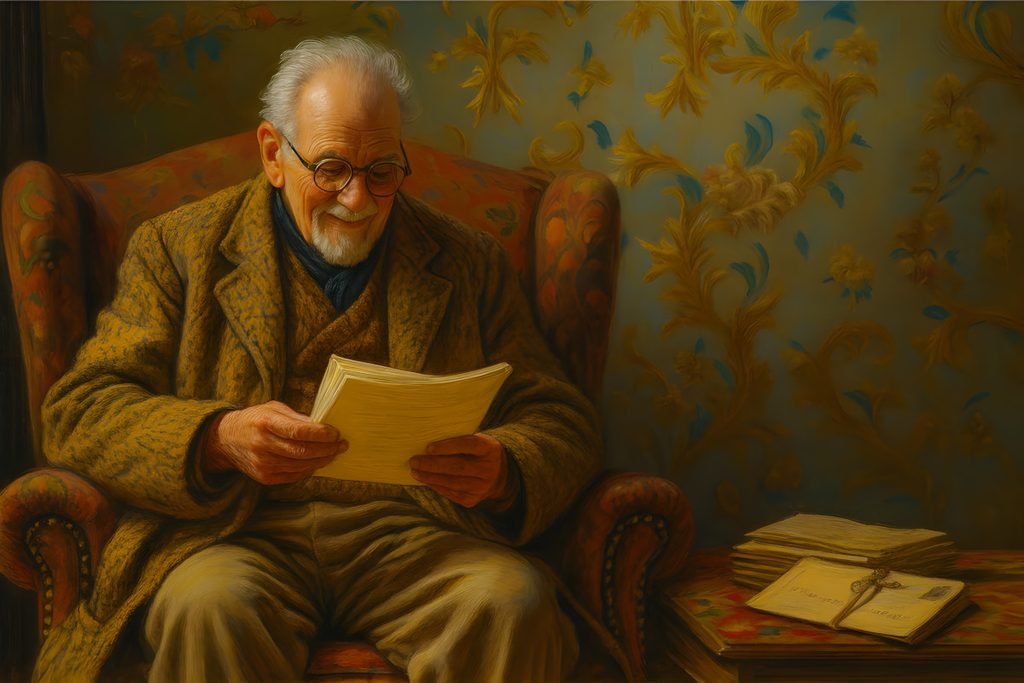
The envelope should not be here. Heavy cream paper, burgundy wax, her name written in ink the colour of autumn earth — in a script that belongs to another century entirely. Eleanor turns it over slowly. No library stamp. No accession number. Only the particular stillness of something that has been waiting.
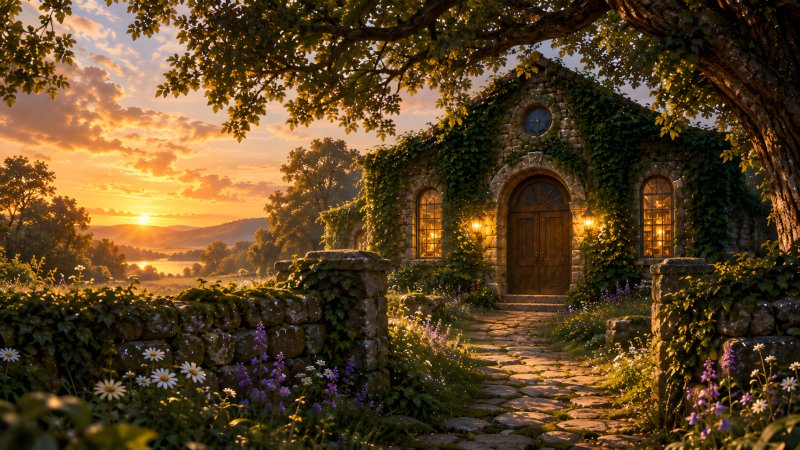
There is a door at the end of an alley that most people walk past without noticing. The ivy reaches for it, the fog gathers around it, and when the door opens it does so without effort — as though it has been expecting this particular arrival.
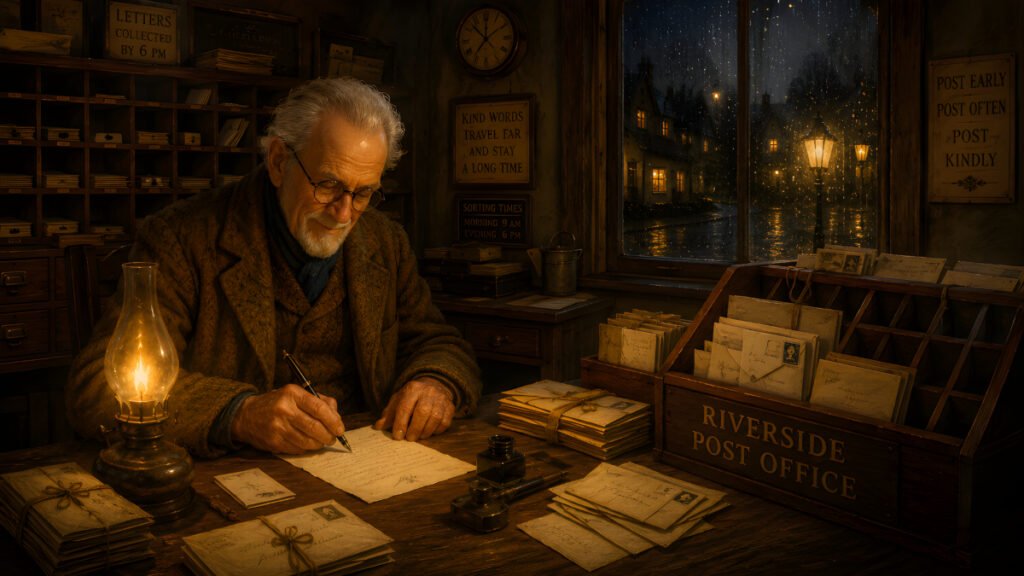
The brass key turns in the lock with a soft click that seems to echo not just in the empty room but in the deeper chambers of memory. Inside, everything remains exactly as it was on his last official day: the sorting desk, the wooden pigeonholes, the ancient scales that weighed parcels with the same indifferent precision.
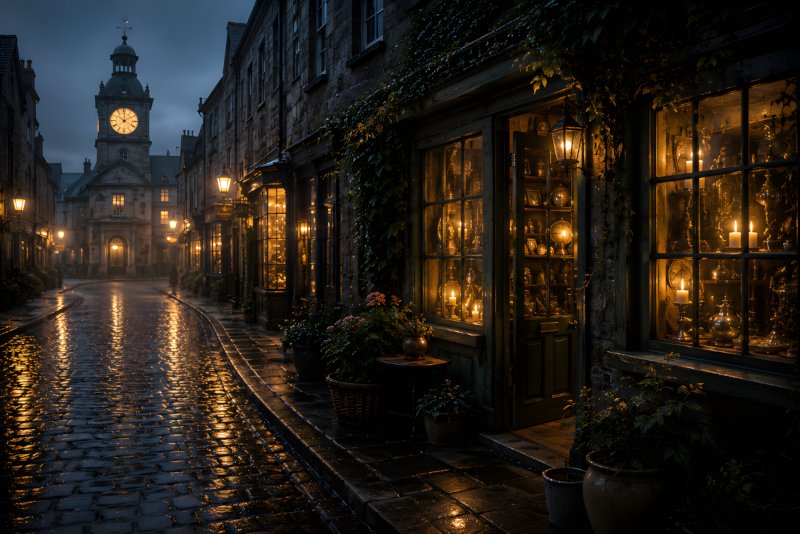
Mist gathers along a cobbled lane as evening settles over a small green door marked Curiosities. Inside, candlelight fills a shop crowded with forgotten objects: walking canes, fountain pens, a silent violin. At the back stands a mirror that reveals visions rather than a face, offering recognition instead of answers.
The first drop arrives as evening settles across the countryside, striking the copper roof with a sound like a small bell touched by a careful finger. Then another follows, and another still, each one finding its place in the quiet music of shelter and rain.
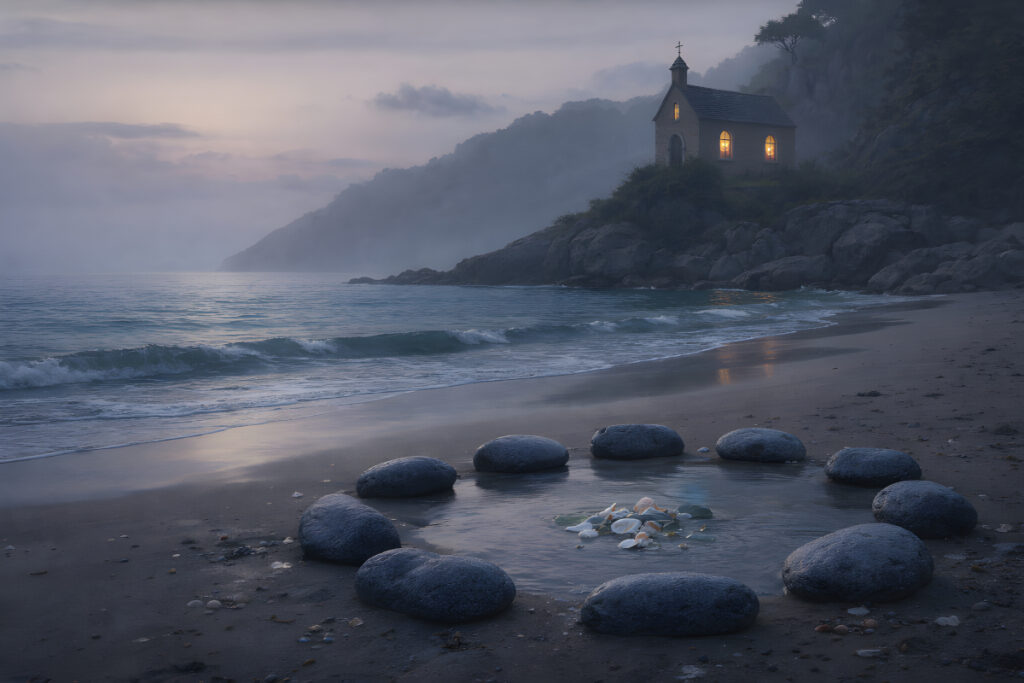
There is a sound beneath the chapel when the tide is low. Not quite a voice. Not quite silence. A boy returns to the shore each morning and listens. In the quiet between waves, he begins to feel that the sea remembers more than anyone has ever spoken.
The sails begin their slow revolution, catching the mild breeze that moves across the grassland. There is no urgency in their turning — only the rhythm of wind meeting wood, of movement born not from force but from invitation. Each blade sweeps through the air with a whispered creak, a sound so familiar to this place that even the larks…
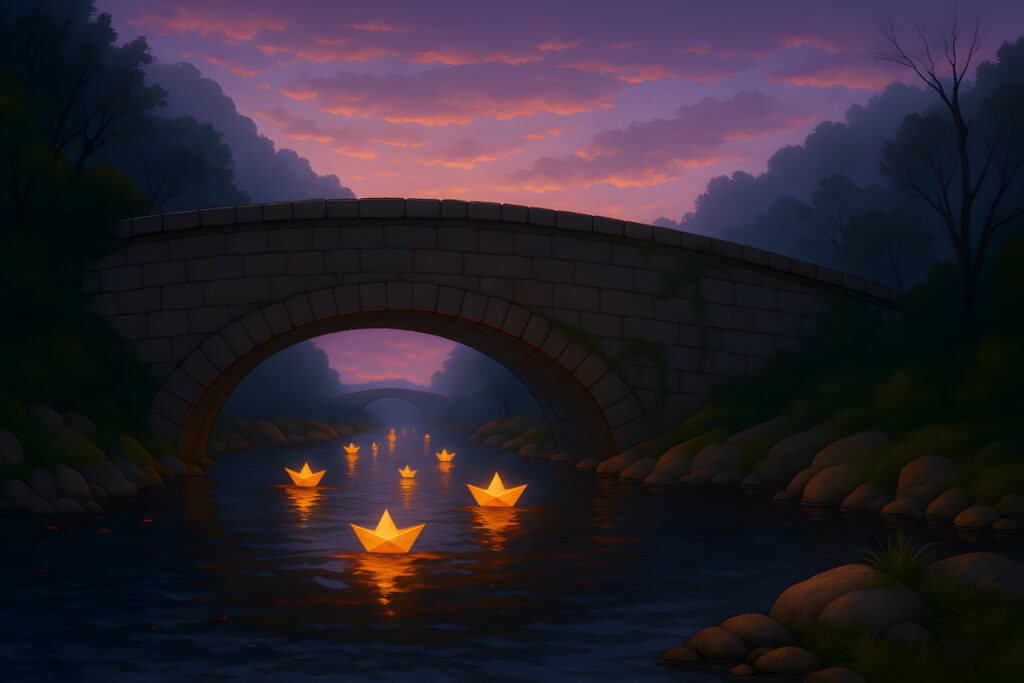
Paper boats drift upon the river with the patience of centuries, each one folded from forgotten words and quiet hopes. They carry no weight but memory, moving neither fast nor slow, guided only by the current that knows where every story belongs.