Five villages hold their breath at day’s turning. A window opens above a bakery. A door waits beneath the ivy. A garden gate creaks for its first visitor. A bus arrives precisely on time. A postman lifts the lid of a box marked Unsent. Quiet lives, quietly witnessed, waiting to carry you toward sleep.
The summit has its own silence, distinct from the silence of lower places — thinner, older, shaped by wind and stone and the slow turning of the sky above. The observatory sits at the edge of this silence, a dome of weathered metal that has learned to wait without restlessness.
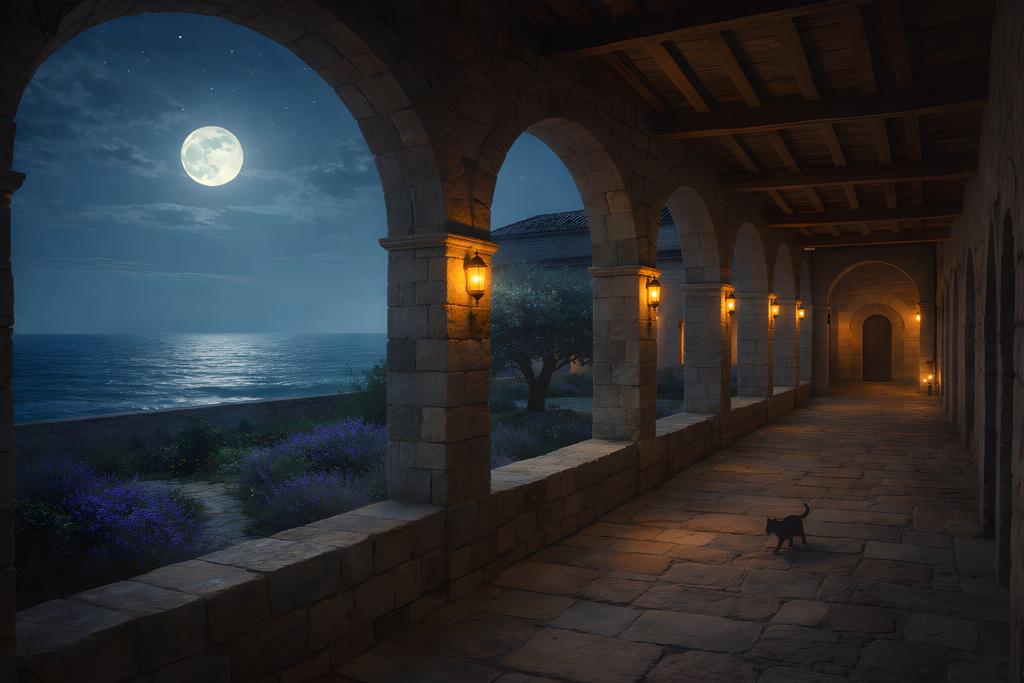
The path winds down through sea grass and wild thyme, each step carrying the scent of salt deeper into the lungs. Evening light pools golden on the clifftops. The monastery emerges from the headland — its walls the colour of old bone, worn smooth by centuries of coastal storms — waiting, as it has always waited, in the quiet above…
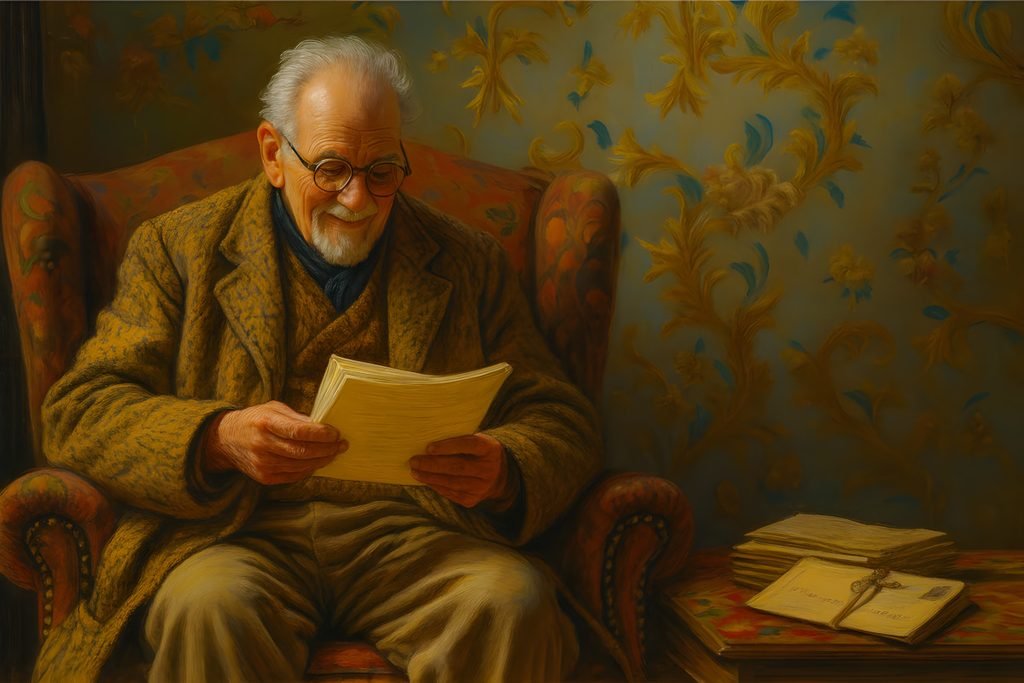
The box had been placed with care — weathered wood, postal twine tied in knots he recognised from decades of handling. On the bottom, in faded pencil, someone had written Undelivered — 1962–1989. His own handwriting, though he had no memory of making the notation. The years struck him as curious.
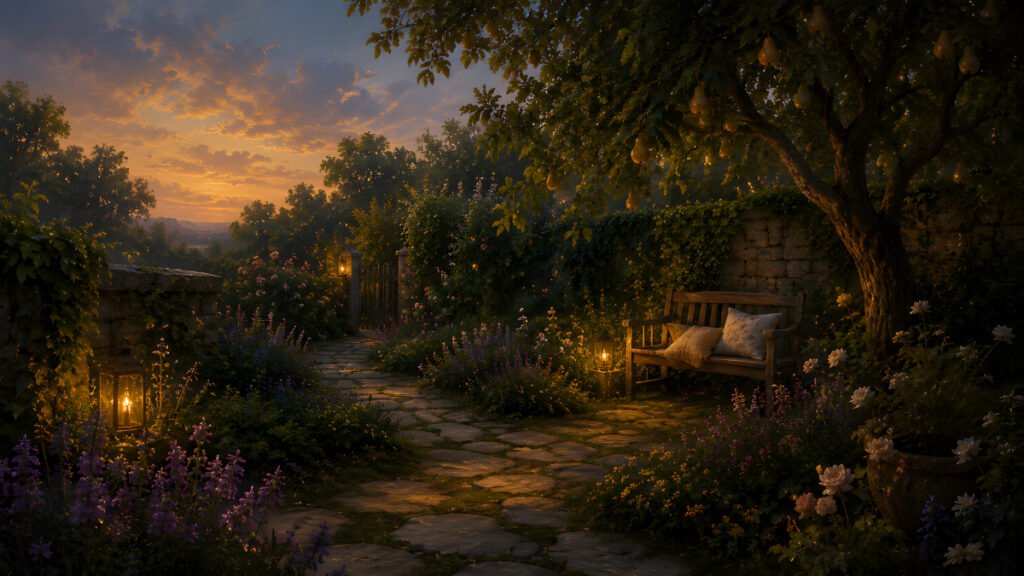
The sun arrived first as whisper, then as warmth, threading itself between the leaves of the old fig tree that stood sentinel beside the garden’s eastern wall. Light pooled in gentle puddles across the flagstone paths, catching dewdrops that had settled overnight on the petals of roses climbing the weathered brick.
The path beneath your feet is not quite earth, not quite moss — something softer still, something that yields to each step with the tenderness of memory itself. Above, the canopy weaves into evening, branches interlocking with the patience of old friends, their leaves whispering secrets that need no translation.
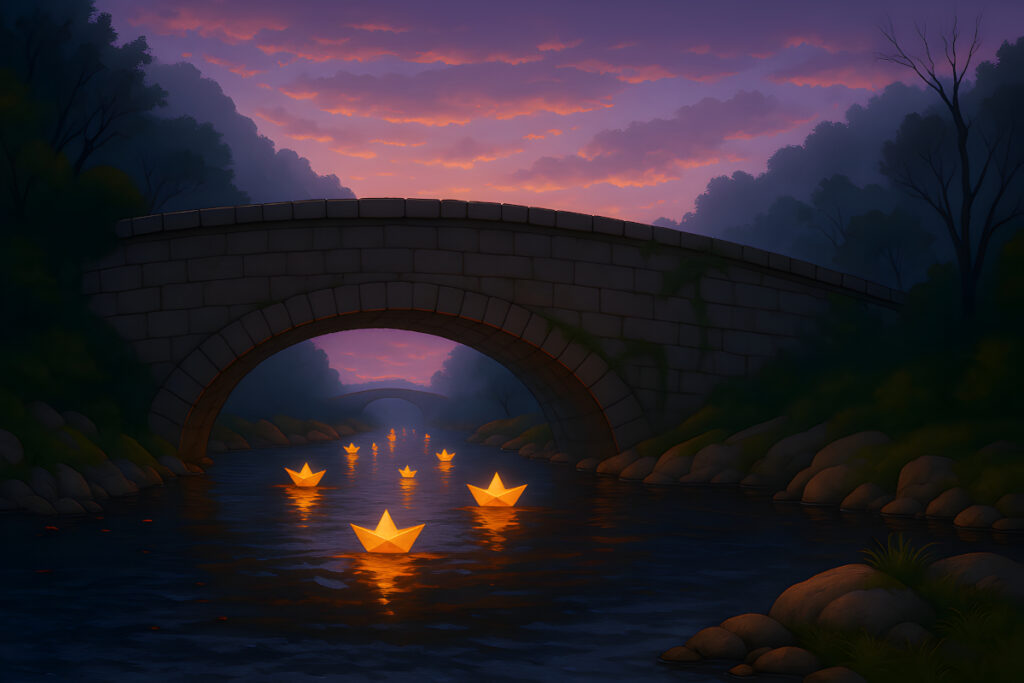
Paper boats drift upon the river with the patience of centuries, each one folded from forgotten words and quiet hopes. They carry no weight but memory, moving neither fast nor slow, guided only by the current that knows where every story belongs.
Step into Whispers Before Dreams, a collection of five atmospheric bedtime stories for adults. Journey from a secluded coastal inn to lantern-filled lavender hills, sail beneath the stars, board a train that never hurries, and discover an unusual antique mirror. Five gentle journeys created for quiet evenings and restful nights.
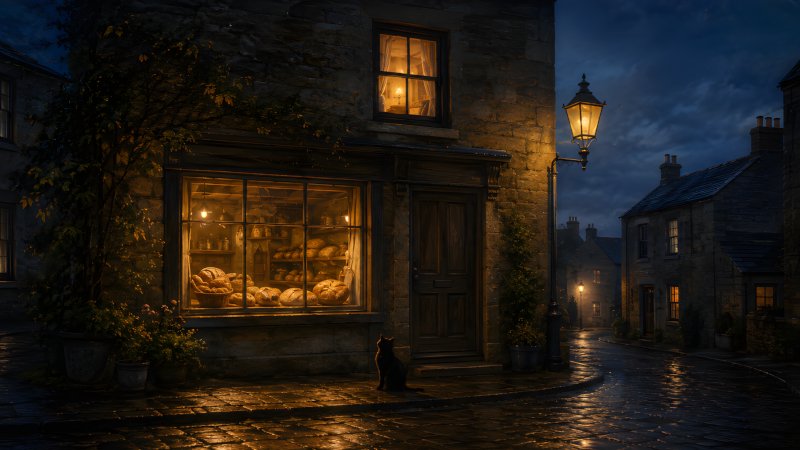
Before the sun has properly risen, the cobbled street lies wrapped in the last blue of night. High above, a window waits on the third floor of a narrow building. Soon it will open, and the scent of bread will begin its slow climb through the building’s bones.
There is a door at the end of an alley that most people walk past without noticing. The ivy reaches for it, the fog gathers around it, and when the door opens it does so without effort — as though it has been expecting this particular arrival.
Upon the table, beside the candle’s warm circle of light, lies a passport — leather the colour of autumn leaves, soft with age. Its pages are thick as parchment, each one a doorway rather than a record. This is no ordinary passport: it bears stamps not of countries that are, but of places that were.
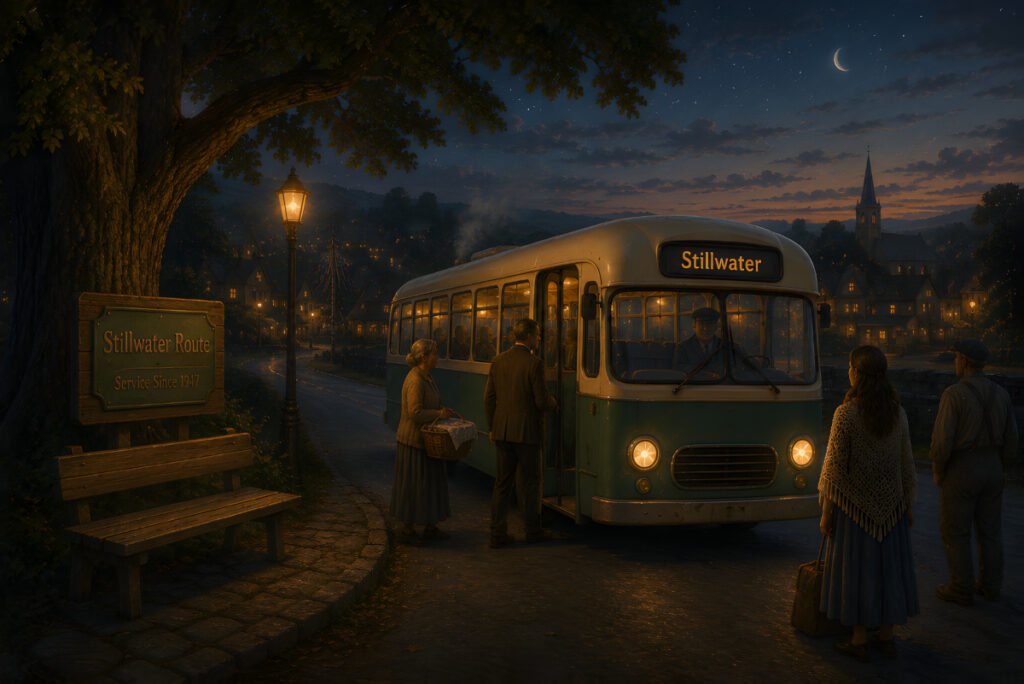
The bus appears around the corner from Mill Street with the slow dignity of ritual, its cream and green paint faded to the colours of old photographs. The headlights cut through the gathering dusk not harshly, but with the warm glow of lanterns, casting long shadows that seem to welcome rather than intrude.
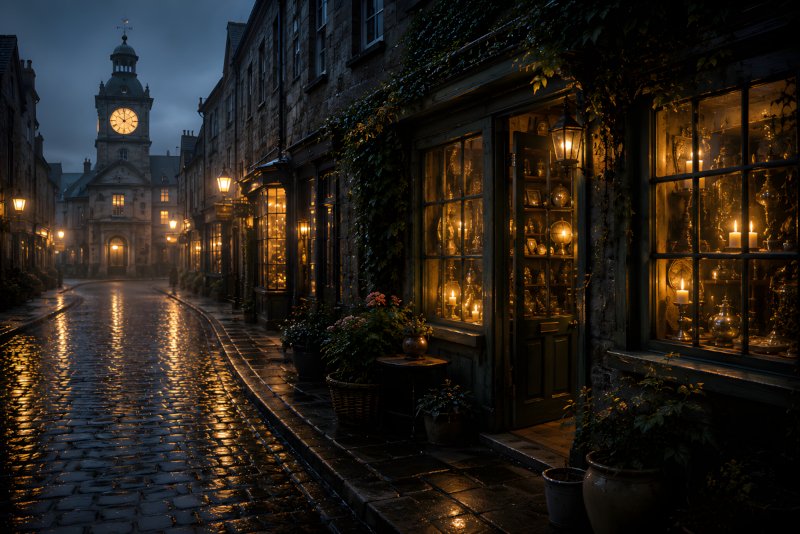
Mist gathers along a cobbled lane as evening settles over a small green door marked Curiosities. Inside, candlelight fills a shop crowded with forgotten objects: walking canes, fountain pens, a silent violin. At the back stands a mirror that reveals visions rather than a face, offering recognition instead of answers.
In the hour before the world remembers its name, paper boats drift along a timeless river, each one folded from a letter never sent, a page of music, a child’s drawing. Elsewhere, a forest grows stories in its moss. A passport opens onto forgotten places. A monastery keeps its evening vigil. A celestial garden floats in permanent stillness.
Dusk settles over the dunes as a lone traveller follows a sand-crusted road toward a weathered inn glowing with lamplight. Inside, corridors hold the scent of driftwood smoke and dried lavender. A room waits beyond a painted window, where sea glass colours soften the view toward the waiting shore.
Far above the world, where the air grows thin and the last light of evening dissolves into something softer, a garden floats in permanent stillness. Its pathways are formed from pale stone that holds its own faint glow, and its flower beds grow not from soil but from crystallised moonlight.
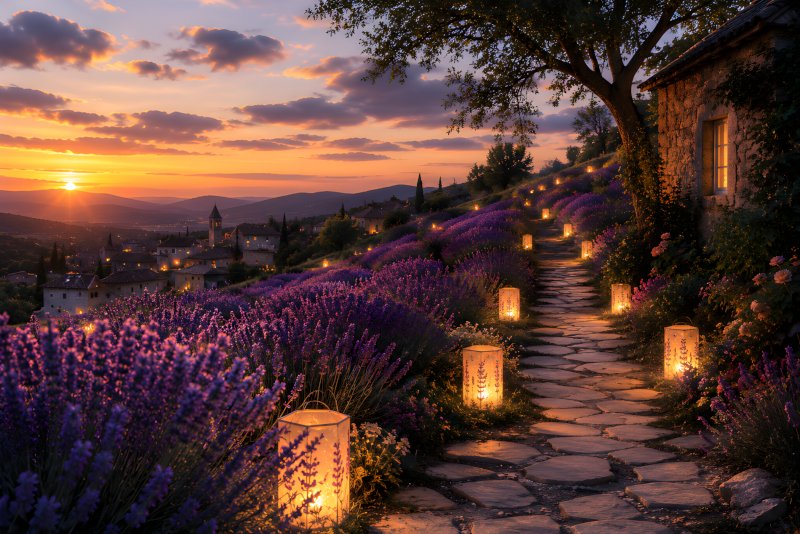
The stone path winds between the hills like a prayer traced in earth, worn smooth by countless footsteps and the gentle passage of seasons. Here, where the lavender grows in great rolling waves, the air still holds the day’s warmth, that particular sweetness of summer evenings when time seems to…
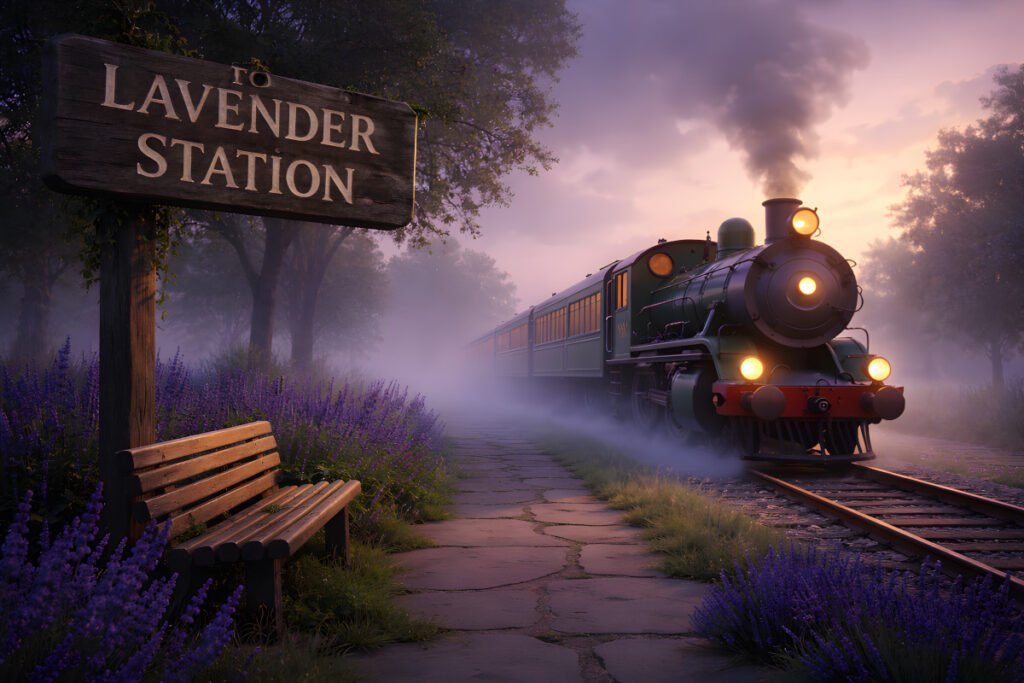
In the hours before morning has claimed the sky, a sound moves through the countryside — soft enough to be mistaken for wind through wheat. The station sign still stands, its letters worn by years of weather. Lavender Station. Those who come here do not plan to.
The path appeared just as the light began to soften, curving through tall grass that whispered against worn stone. Somewhere ahead, through the amber haze of approaching dusk, a building emerged — not quite a house, not quite an inn, but something altogether more welcoming than either.
In a quiet room lit by candlelight, a letter waits beside an open window where stars gather in silence. Beyond the glass, distant lights shimmer along a river, carrying traces of journeys long passed. Here, memory does not fade—it settles gently, like ink upon paper, waiting to be remembered.
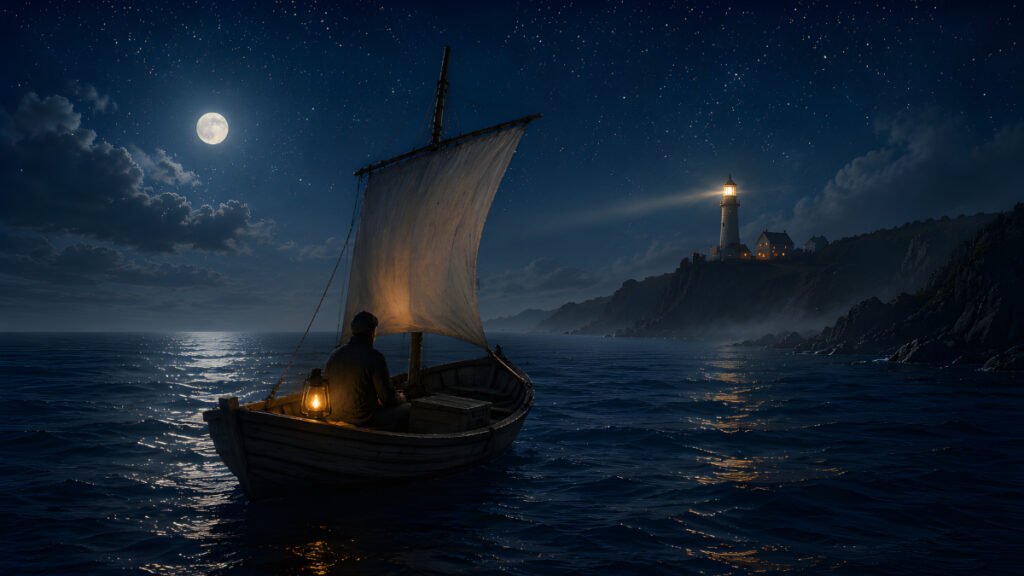
A pulse of light, far off to the north-east. Slow and steady, appearing and disappearing in a rhythm that carried no urgency, a patient turning that repeated itself without change. He did not change course toward it. There was no reason to. It was simply there, doing what it had always done.